Monday, February 23, 2015
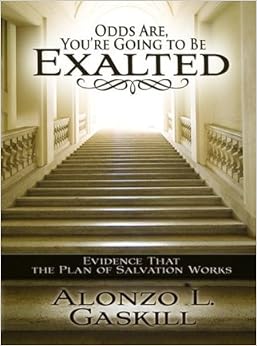
Odds Are, You're Going to Be Exalted by Alonzo Gaskill
**Note: I am a member of The Church of Jesus Christ of Latter-day Saints. This book is written by an LDS author and is pretty particular to LDS doctrine. If you have questions about my beliefs, I'd love to talk to you, or you can visit THIS PAGE on Mormon.org to understand a little more about what we believe this life and the life after are all about. I love talking to people about what I believe, but please don't use this post as a forum for negative comments about my beliefs.
As a guilt-prone person of faith, I have lots of moments where I wonder if I'm really doing enough in the eyes of God. I always feel like I could be doing more...because all of us could be doing more. When is enough, enough? And even though I know we have been given the gift of Jesus Christ's Atonement to help overcome sin and weakness, I wonder if I'm applying it the way I'm supposed to. If I'm going to make it to the highest degree of glory, with all my family in tow, have I really done enough? This book calmed many of those doubts and fears.
I originally picked this book up because the author was my Book of Mormon professor my very first semester at BYU. He was the most entertaining professor I ever had, and he is an amazing scriptorian. When I saw this title pop up on my local library's Overdrive list, I decided to give it a shot. I'm so glad I did.
Gaskill uses a mix of scripture, quotes from general authorities, and commentary from gospel scholars to provide a compelling argument for his title statement: odds are, you're going to be exalted. One of his main points really hit home with me. After discussing what we know about the opportunity people without the gospel will have to receive it after death, he addresses this question: "so wouldn't it be easier to get to the celestial kingdom if I didn't have the gospel on earth then just accept it after?" He notes that there is no way being born in the latter-days and having the blessings of the gospel and covenants in the temple is a disadvantage. While it's true that where much is given, much is required, that doesn't mean having the gospel means you're less likely to make it to the celestial kingdom. That doesn't even sound logical. We should have a great advantage because we have the gospel and access to so many blessings. He provides much more evidence supporting this idea in the book.
After initially feeling reassured while reading the book, I started to have one big, creeping doubt as I got closer to the end. In a section on wayward children, Gaskill provides scriptures and quotes to support the idea that children will eventually return, after they've gone through the proper repentance process and suffered for any sins left unresolved. As a parent, I found comfort in this idea and know that the scriptures promise this. However, I have a hard time wanting this to apply to even the people in my life who are very intentionally making choices that harm other people, trying to tear them down. If these people have parents who keep their covenants, do they get to make it to? That doesn't seem fair to me, when I'm over here trying my hardest to live the right way. The justice part of my brain couldn't make peace with that. In the final chapters, my worries were assuaged. Through quotes from general authorities, Gaskill brought home the point that, in the end, both justice and mercy will prevail. God will take care of all. We are all His children and He wants us all to return to Him, but He will not let any unclean thing enter his presence. It will all work out. I want Him to be merciful with me, so I have to let Him show mercy towards others, trusting that the demands of justice will be met.
I would highly recommend this book to any LDS person looking to gain some additional insight into the plan of salvation. It was extremely thought provoking and allowed my husband and I to have some great discussions. I do have one disclaimer on any book like this, written by a gospel scholar and not as a church publication: THIS BOOK IS OPINION, NOT DOCTRINE. Although Gaskill uses scriptures and quotes from general authorities, he put them together in a way that makes sense to him that support his opinion of the plan of salvation. There are some beautiful truths in this book, but it is up to each of us, individually, to prayerfully consider the ideas and make sense of it.
Overall Rating: 4 stars
Content Warning: Nothing offensive, just a lot of religious stuff!
Target Audience: LDS adults, possibly even teens
Thursday, February 19, 2015
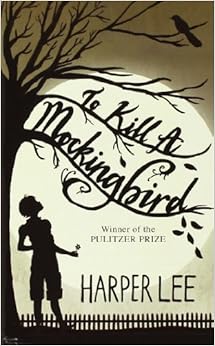
To Kill a Mockingbird by Harper Lee
I hadn't read Harper Lee's classic since high school, so when I heard her new book was coming out later this year, I decided it was the perfect time to re-read To Kill a Mockingbird. I've always counted it as one of my favorite books, so I was curious to see if that sentiment would hold true 15 years later, now as an adult and mother.
I was sucked in from the very first page. It's a shame Lee never really wrote anything else. Her writing is captivating. The characters are so rich. And I have a confession to make. I. LOVE. ATTICUS. FINCH. He strikes a perfect balance of tirelessly sticking to his guns while being the most empathetic person in Maycomb County. His ability to stay cool under pressure speaks volumes about his personal integrity.
One of my favorite things about this book is that it's told from Scout's perspective. The events of this novel would be interesting regardless of who's narrating. But having the whole thing told from a young child's perspective brings a certain clarity and naive honesty to the story. Atticus often has to reign in Scout's temper and teach her the very principles that make him such a respectable man. Scout is also proof that the racial prejudices at the foundation of the story are culturally imposed, not something we identify with as children. Scout, who has been raised by a black nanny, can't understand why the white people in town are so willing to believe a lie about a black man when there's a pretty questionable white man tied to the problem. I would guess this fact may be the reason Lee chose Scout as the narrator. By examining racial prejudices from a child's perspective, Lee illuminates just how unjust things were in segregated communities not so long ago.
I'm glad I took the time to re-read Mockingbird and plan on doing it again a few years down the road. It's a literary masterpiece that examines issues that, although removed in time and place, still exist today. It's a good reminder to try to look at things objectively and not let our own prejudices create blind spots.
Overall Rating: 5 stars
Content Warning: Occasional language. Sensitive subject matter for children (the central point of the story is a lawsuit alleging the rape of a white girl).
Target Audience: Anyone high school age or older should read this book at least once in their lifetime. If you've been putting it off, go pick it up and read it!
Friday, February 6, 2015
Breathing Room by Marsha Hayles
Breathing Room is another Beehive Award Nominee that I picked up alongside Skinny and Paperboy. This children's novel tells the story of Evvy, a 13-year-old girl battling tuberculosis in 1940. As was customary at the time, Evvy is sent to a sanatorium where she rooms with several other girls battling the same, terrible disease. Evvy experiences pain, heartache and loss as she battles her own disease and watches those around her suffer as well. Her hopeful attitude carries her through as she makes dear friends and tries to heal enough to return home.
It's fascinating to me to read about how doctors used to try to treat various illnesses. They were often working blind, and so much of it was guesswork. I think we take medical technology advances for granted. When my oldest daughter was only 6 weeks old, she was hospitalized with an infection that led to a diagnosis of a kidney issue. After a 10 month battle with repeated infections, she had surgery to correct the problem. Many times in those 10 months, I thought about the fact that just 50 or 100 years ago, she would have died.
There are so many curable diseases now. Tuberculosis is one of those. We have vaccines to prevent it, and doctors know exactly how to treat it if you do contract it. But in 1940, it was dangerous enough to send small children to sanatoriums hundreds of miles from home, to be cared for by stranger, alongside other dying children. As a mother, I can't imagine sending my child a place like that. But it was necessary for survival back then. I found Evvy to be an admirable character, full of compassion, determination and, above all, bravery. In a time when she could have just worried about herself, she looked to help others. Amid bizarre, painful treatments, she found reasons to have hope. That's more people twice or three times her age could often do.
I thought this was a good quick, but insightful, read. Although the subject matter is a little heavy for a kids' book, I would read this with a 9 or 10 year old. I think it could provide for really good discussions about disease, death, and the amazing medical advances we've had in the last 75 years.
Overall Rating: 3 stars
Content Warnings: Heavy subject matter for young children.
Target Audience: Upper elementary/middle school kids.
Subscribe to:
Comments (Atom)